
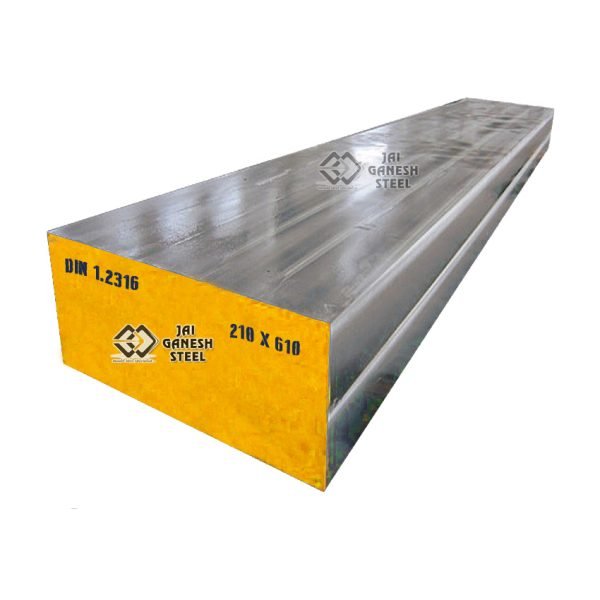
1.2311 Tool Steel Plate for Plastic Moulds (510 × 160 mm), DIN 1.2311 Alloy Tool Steel Plate – 510 × 160 mm
- Description
- Reviews (0)
Description
Heading
DIN 1.2311 Plastic Mould Steel Plate (510 × 160 mm)
Link (URL Slug)
din-1-2311-plastic-mould-steel-plate-510×160
Product Description
DIN 1.2311 Plastic Mould Steel Plate is a high-performance pre-hardened alloy tool steel developed for the production of plastic injection moulds, mould bases, tooling plates, and precision engineering components. It is well known for its excellent machinability, high toughness, reliable wear resistance, and uniform hardness, making it one of the most trusted mould steel grades in the tooling industry.
Supplied in a pre-hardened condition with a typical hardness of 28–34 HRC, DIN 1.2311 steel can usually be machined without further heat treatment. This reduces manufacturing time, lowers production costs, and minimizes the possibility of distortion or cracking during machining.
The addition of chromium, molybdenum, and manganese enhances the steel’s mechanical strength, hardenability, and durability. These alloying elements also improve polishing performance, dimensional stability, and resistance to wear, allowing the material to perform efficiently in long production runs.
Manufactured in accordance with DIN standards, 1.2311 Plastic Mould Steel is widely used for producing mould plates, tooling blocks, round bars, and custom-machined components. It is an excellent choice for industries requiring precision, consistency, and long service life.
Related Specifications
- DIN 17350
- AISI P20
- ASTM A681
- GB/T 3Cr2Mo
Chemical Composition
| Element | Content (%) |
|---|---|
| Carbon (C) | 0.35 – 0.45 |
| Silicon (Si) | 0.20 – 0.40 |
| Manganese (Mn) | 1.30 – 1.60 |
| Phosphorus (P) | ≤ 0.035 |
| Sulfur (S) | ≤ 0.035 |
| Chromium (Cr) | 1.80 – 2.10 |
| Molybdenum (Mo) | 0.15 – 0.25 |
Equivalent Grades
- AISI P20
- ASTM P20
- GB 3Cr2Mo
Available Forms
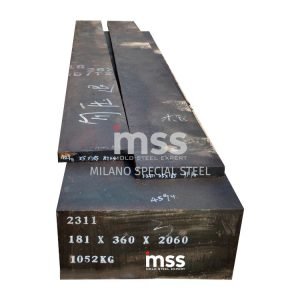
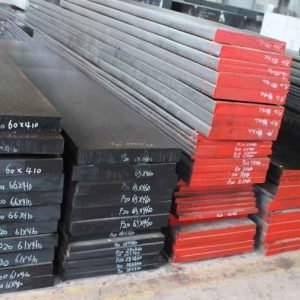
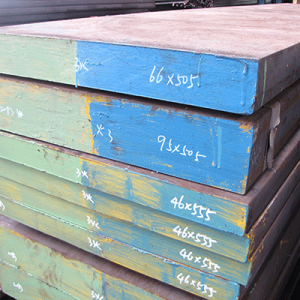
- Steel Plate
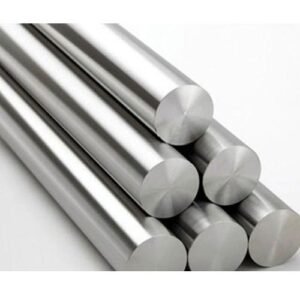
- Round Bar
- Flat Bar
- Square Block
- Hexagonal Bar
- Precision Ground Flat Stock
- Ground Round Bar
Custom-cut sizes, machined blocks, and precision-ground materials are available to meet specific customer and project requirements.
Applications
DIN 1.2311 Plastic Mould Steel Plate is commonly used for manufacturing:
- Plastic Injection Moulds
- Plastic Mould Bases
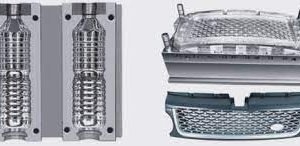
- Blow Moulds
- Compression Moulds
- Die Casting Moulds
- Aluminium Die Casting Tools
- Magnesium Alloy Dies
- Hot Forging Dies
- Extrusion Tooling
- Tool Holders
- Die Sets
- Automotive Plastic Components
- Consumer Goods Moulds
- Industrial Tooling Components
Supply Range
Round Bar
- Diameter: 20 mm – 1400 mm
Steel Plate
- Thickness: 20 mm – 1400 mm
Custom dimensions and precision-cut materials can be supplied according to customer specifications.
Heat Treatment
Forging
Heat the material gradually to 930–1050°C and maintain a uniform temperature throughout the section. After forging, cool the steel slowly to reduce internal stress and improve structural integrity.
Annealing
Heat to 775–790°C, hold at temperature until thoroughly soaked, and allow the material to cool slowly inside the furnace to enhance machinability.
Quenching
Heat uniformly to 820–840°C and quench in oil to obtain the desired hardness, strength, and wear resistance.
Tempering
Temper within the range of 100°C–600°C, depending on the required mechanical properties. After tempering, cool the steel naturally in air.
Processing
DIN 1.2311 Tool Steel is available as steel plates, round bars, flat bars, square blocks, and precision-ground stock in both standard and customized dimensions. Materials can be supplied with close machining tolerances and various surface finishes, making them suitable for precision plastic mould manufacturing, tooling, die-making, and general engineering applications.

Reviews
There are no reviews yet.