
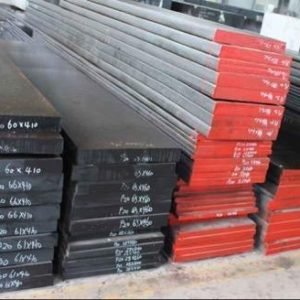
1.2311 Tool Steel Plate, DIN 40CrMnMo7 Steel Plate
- Description
- Reviews (0)
Description
DIN 1.2311 Plastic Mould Steel Plate (255 × 160 mm)
Link: din-1-2311-plastic-mould-steel-plate-255x160
DIN 1.2311 Plastic Mould Steel Plate (255 × 160 mm) is a premium pre-hardened alloy tool steel specially designed for manufacturing high-quality plastic injection moulds and precision tooling. Known for its excellent toughness, wear resistance, and machining performance, this steel grade is widely used in mould-making industries where long service life and consistent performance are essential.
Supplied in a pre-hardened condition, 1.2311 Steel Plate reduces production time by eliminating the need for additional hardening in most standard applications. Its balanced alloy composition provides excellent dimensional stability, superior polishability, and reliable mechanical properties, making it suitable for medium and large mould components.
Chemical Composition
| Element | Content (%) |
|---|---|
| Carbon (C) | 0.35 – 0.45 |
| Silicon (Si) | 0.20 – 0.40 |
| Manganese (Mn) | 1.30 – 1.60 |
| Phosphorus (P) | ≤ 0.035 |
| Sulfur (S) | ≤ 0.035 |
| Chromium (Cr) | 1.80 – 2.10 |
| Molybdenum (Mo) | 0.15 – 0.25 |
Equivalent Steel Grades
- AISI / ASTM: P20
- GB Standard: 3Cr2Mo
Available Forms
DIN 1.2311 Tool Steel is available in multiple supply forms to suit different manufacturing requirements.
- Round Bar
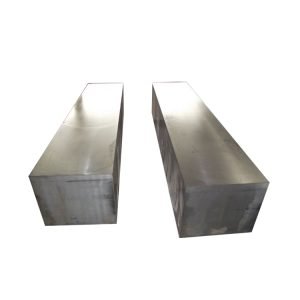
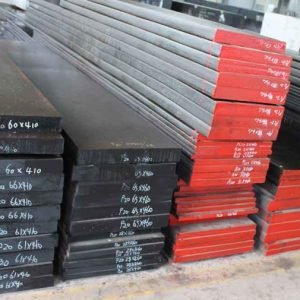
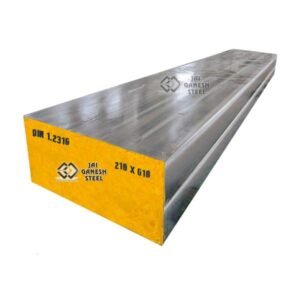
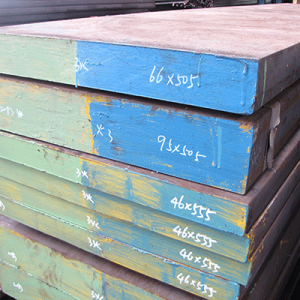
- Steel Plate
- Flat Bar
- Square Block
- Hexagonal Bar
- Precision Ground Plate
- Ground Round Bar
- Cut-to-Size Blocks
Custom cutting and precision machining services are available according to customer specifications.
Applications
DIN 1.2311 Plastic Mould Steel Plate is widely used for manufacturing:
- Plastic Injection Moulds
- Plastic Mould Bases
- Zinc Die-Casting Moulds
- Aluminium Die-Casting Dies
- Magnesium Alloy Moulds
- Hot Forging Dies
- Metal Extrusion Dies
- Tool Holders and Die Sets
- Precision Engineering Components
- Industrial Tooling
Supply Range
Round Bar
- Diameter: 20 mm – 1400 mm
Steel Plate
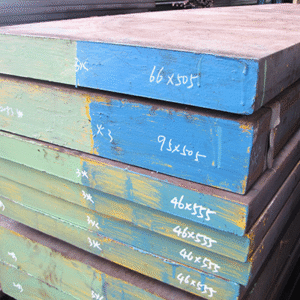
- Thickness: 20 mm – 1400 mm
Additional dimensions and custom-cut sizes are available upon request.
Heat Treatment
Forging
Heat slowly to 930–1050°C and maintain a uniform temperature throughout the material. After forging, allow the steel to cool gradually to relieve internal stresses and maintain structural integrity.
Annealing
Heat the material to 775–790°C, soak thoroughly, and cool slowly inside the furnace to improve machinability and achieve a refined microstructure.
Quenching
Heat to 820–840°C followed by oil quenching to obtain the desired hardness and mechanical strength.
Tempering
Temper between 100°C and 600°C according to the required hardness and application. Hold the material at the selected temperature for an adequate period before cooling in still air to achieve optimum toughness, wear resistance, and dimensional stability.

Reviews
There are no reviews yet.